


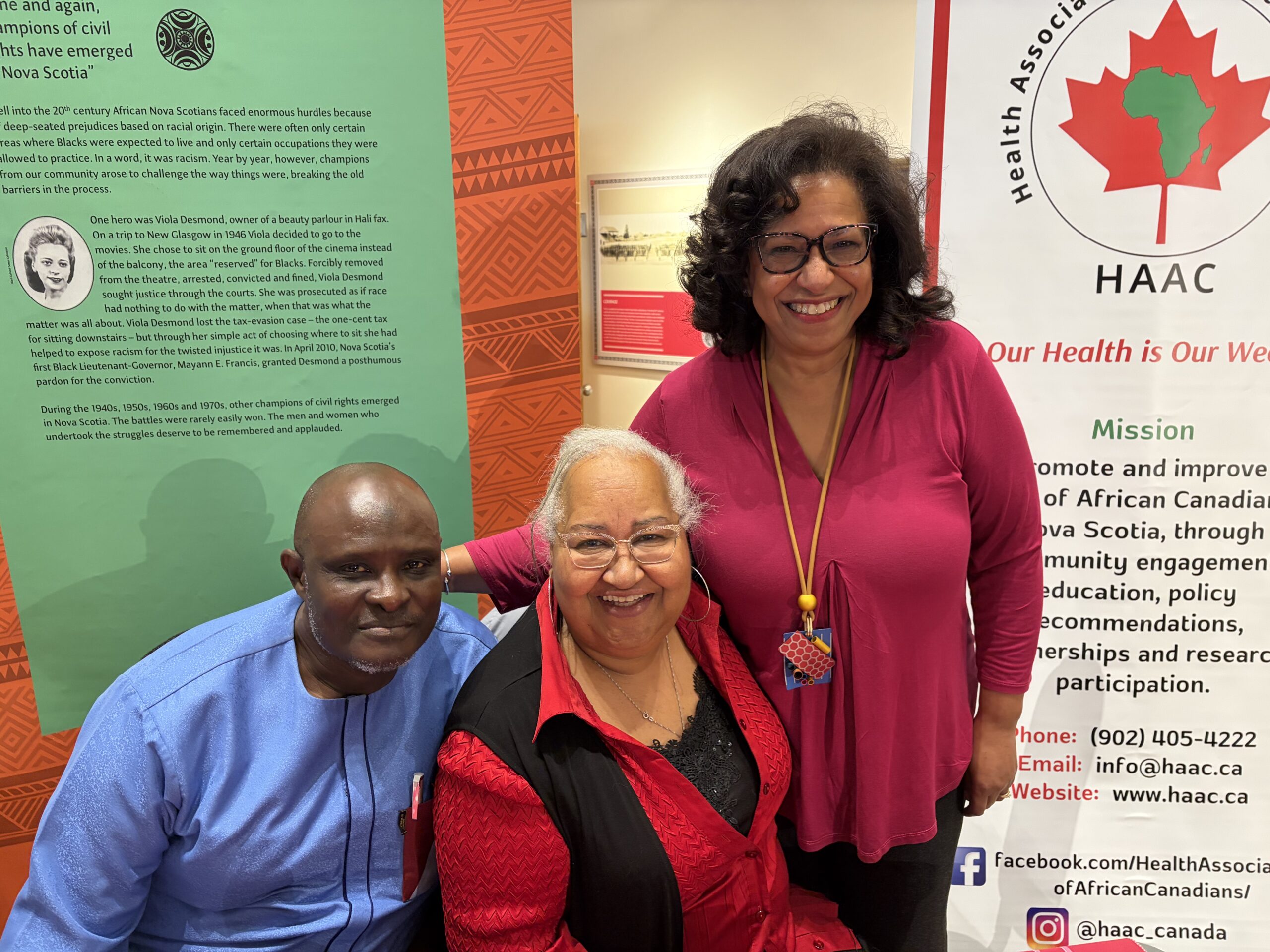
Valentine’s Day became a celebration of Heart Health at the Black Cultural Centre, with the sharing of information, music, healthy food and community.
“I’m very, very happy,” said Sharon Davis-Murdoch, looking out at the large crowd. Sharon is a founding member and co-president of the Health Association of African Canadians (HAAC) and board member of the Dartmouth General Hospital Foundation. “I’m so pleased with the responsiveness to the information and to the music which lifts us up.”
The Heart Health event is one of the latest projects to connect people in the Preston Township with the Dartmouth General Hospital. This program grew out of a recognition that even though heart disease disproportionately affects the Black community, many African Nova Scotians weren’t receiving equitable care.
“I’m sure heart disease is there, but I can also imagine why you don’t see patients – because of the history of mistrust and the history of institutionalized racism, anti-Black racism.”
Sharon Davis-Murdoch said that’s when efforts began to build a bridge. The Health Association of African Canadians, the Preston Township, community and faith leaders and the Black Cultural Centre joined forces to create the African Nova Scotian Heart Health Outreach Program, with support from TD Bank.
“The original program goals were to create increased awareness about heart health, to determine barriers that exist to accessing anti-racist, culturally connected cardiovascular health services at the Dartmouth General, and to identify the best ways to address them,” she said. “We knew those were the ingredients for real change. And for people to show up, for people to feel heard and build trust.”
Sharon co-hosted the Heart Health event, along with Black Cultural Centre CEO Russell Grosse. Guest speakers included cardiac and vascular surgeon Dr. Christine Herman, Dartmouth General Medical Site Lead Dr. Natalie Cheng, and DGH Foundation President and CEO Stephen Harding. The Concerts in Care musical performance featured Mark Riley, John Ebata and Shimon Walt.
“This is an example of building culturally competent ways of engaging Black communities,” said Sharon. “And of that, I’m very, very proud.”


