A medical device company with roots in frontline emergency care at Dartmouth General Hospital is about to reach a national audience on the popular, award-winning television series The Pitt.
The company is Ring Rescue, a Nova Scotia–based medical device manufacturer co-founded in 2018 by Dr. Kevin Spencer, an emergency physician at Dartmouth General, along with engineer partners Patrick Hennessey and Brad MacKeil. Their mission: to establish a new global standard of care for a surprisingly common clinical problem that has outpaced legacy solutions.
And the message is resonating.
“The problem we’re solving is stuck rings,” says Dr. Spencer.
While it may sound minor, ring entrapment can become serious.
“Fingers can swell for many reasons, including heat, injury, illness, and pregnancy, to name a few. A snug ring can become a stuck ring and as swelling worsens, this can escalate into a finger-threatening tourniquet situation if not properly managed.”
Rings are culturally significant, and Dr. Spencer notes that over half of North American adults are believed to wear rings.
“Simple cases of ring entrapment are easy, often solved at home with a bit of soap. But difficult cases require ring cutting and specialized tools and that is where things get more complicated.”
Modern Rings Demand Modern Solutions

The Ring Rescue team recognized an important gap and opportunity: rings have changed, but ring removal devices hadn’t.
“Over the past few decades, modern durable ring metals have become commonplace, with materials like tungsten carbide, titanium, and stainless steel now widely popular. But many healthcare settings still rely on outdated equipment that cannot manage modern rings.”
Dr. Spencer notes that this has led well-intentioned frontline healthcare providers to improvise in patient care. “Where else in modern healthcare are we using non-medical tools for clinical procedures?” asks Dr. Spencer. “We recognized a significant care gap and engineered safe, effective, FDA and Health Canada compliant medical devices to solve it.”
Commercializing a medical device means building for the real-world demands of frontline care, while meeting global regulatory standards designed to safeguard patients. Re-centering this clinical procedure around medically appropriate, purpose-built devices restores medical standards—and in an increasingly strained healthcare system, it also enables safer, faster, and more definitive patient care.
Today, the Ring Rescue Kit stands as a testament to the power of frontline experience fused with high-end engineering. It is a professional-grade, regulatory-compliant solution that restores flow to the Emergency Department while meeting the demands of modern patient care, and recent real-world evaluation data shows measurable benefits.
“Ring Rescue products are now deployed in every emergency department across Nova Scotia, as well as in more than 2,000 other sites across North America. A Nova Scotia evaluation of province-wide deployment reported improved patient outcomes, reduced delays, and meaningful system cost savings. Combined with other publications, the results are compelling. We’ve solved this medical problem exceptionally well”.
A Complete Approach to a Common Clinical Problem
Ring Rescue’s first product was the Compression Device, designed to provide a non-destructive option for ring removal. It uses controlled, localized air pressure to reduce finger swelling, allowing a ring to slide off without the need to cut the ring.
“Rings are sentimental and expensive, and when feasible, having an approach that preserves a ring from damage is good patient care.”
But not every case can be resolved non-destructively. Injury, arthritis, deformity, or severe swelling can require a definitive approach, which means ring cutting.
That need led to Ring Rescue’s second device: the Dolphin Ring Cutter, a sophisticated yet easy-to-use device that safely cuts through all modern ring materials. The engineering goes beyond simply cutting. The Dolphin Ring Cutter evolved from deep clinical roots.
“We don’t just cut rings; we protect fingers, for example with our smart cutting technology that avoids generating ring heat,” says Dr. Spencer. “That requires a microprocessor, diamond cutting discs, and the engineering success to cut through modern, extremely durable metals that were previously uncuttable.”
Together, these tools form the Ring Rescue Kit, providing clinicians with a complete and practical medical device solution.
With customers that include emergency departments, urgent care, surgery clinics, and fire/EMS departments in Canada and the U.S., many leading hospitals like Mayo Clinic, Cleveland Clinic, and Mount Sinai have gotten onboard.
Dr. Spencer also noted that over 46,000 single-use cutting discs have been used in clinical care.
“Those discs represent thousands of real patients,” says Dr. Spencer. “Every one of those cases needed a safe solution and without the right solution, these situations can become delayed, stressful, resource-intensive, and finger safety is on the line.”
A story that reflects why preparedness matters
One of the clearest examples of Ring Rescue’s impact comes from an 11-year-old girl in Georgia who tried on a friend’s ring and couldn’t get it off.
Her finger quickly became swollen and discolored. After care escalation across two hospitals, spanning over six hours of healthcare attempts, surgery was becoming the only option, with concerns that her finger could be at risk.
By chance, an EMS supervisor was present who had access to Ring Rescue equipment, and within minutes the ring was safely removed.
“It’s a precise cut, it’s a reliable and safe approach, and preparedness matters in frontline care,” said EMS District Chief Michael Royal. Dr. Spencer adds “And in many cases, the ring can even be repaired afterward.”
From Nova Scotia to the Global Stage

Ring Rescue’s rapid growth has been fueled by clinical demand and by the recognition that stuck rings are far more common than most people realize.
After a successful pitch on CBC’s Dragons’ Den, the company gained wider public awareness and momentum. Most recently, Ring Rescue was named one of Canada’s Top Growing Companies by The Globe and Mail.
Now, Ring Rescue is poised for perhaps its biggest public spotlight yet.
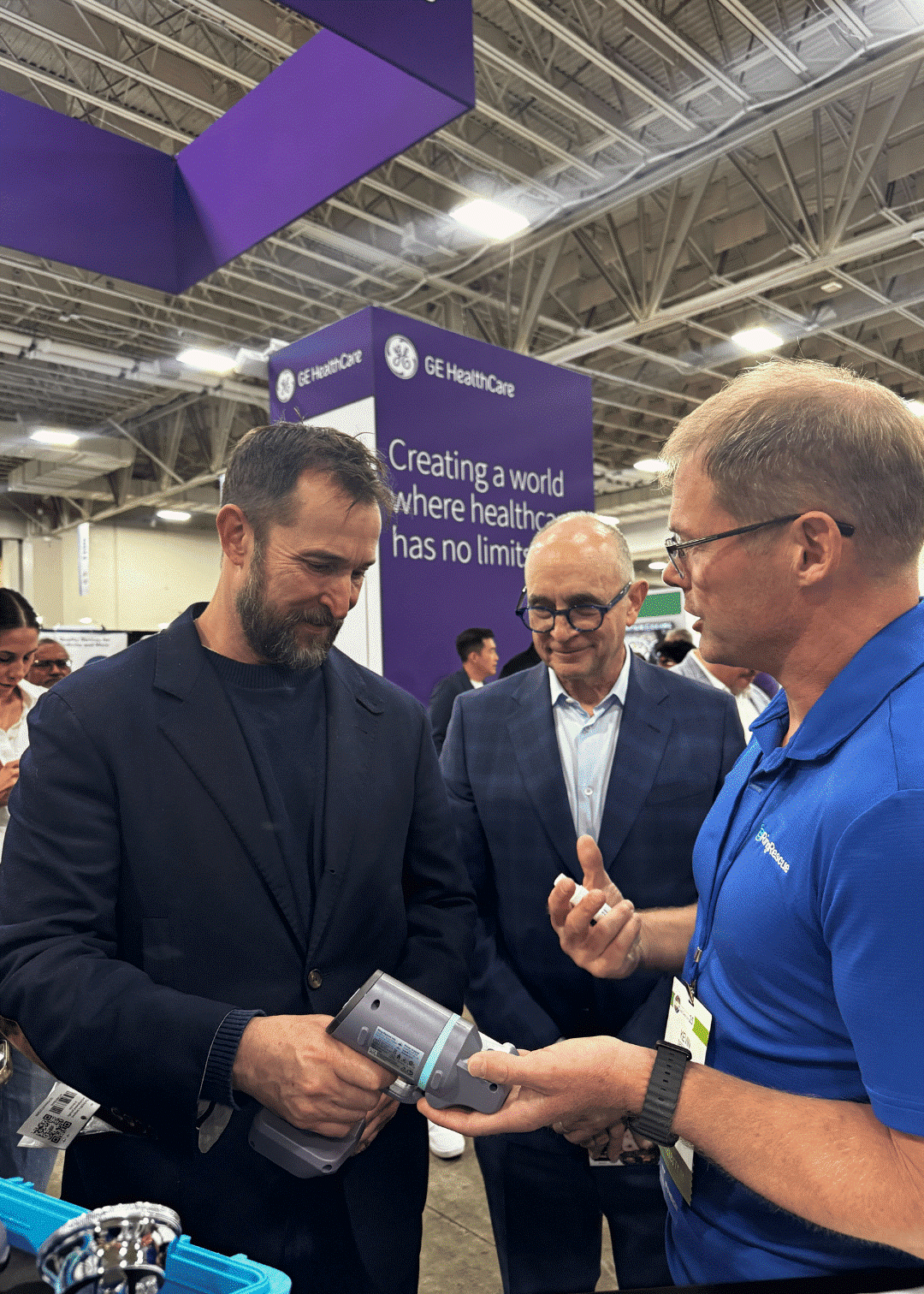
This spring, the company’s devices will appear on The Pitt, an HBO Max medical drama set in a Pittsburgh hospital. Dr. Spencer, a longtime fan of the show, reached out to the creative team and later provided a demonstration to actor Noah Wyle at an emergency medicine conference in Salt Lake City. The episode featuring Ring Rescue is expected to air in March.
“It’s a great example of how the show stays grounded in real emergency medicine,” says Dr. Spencer. “To see a made-in-Nova-Scotia innovation represented on that stage is exciting and it’s a major opportunity to raise awareness about a real clinical issue and the solution we provide.”
Where it started and why Dartmouth matters
Even as Ring Rescue expands, Dr. Spencer continues to work shifts at Dartmouth General Hospital.
“Dartmouth General gave us the clinical proving ground to build the right product and keep improving it,” he says. “This included support from the Foundation, which provided a 3-D printer for staff use — something we absolutely leveraged in the early days for prototyping.”
Through this work, the team and the staff at Dartmouth General have become world experts in ring entrapment as a clinical condition, and clinicians at Dartmouth General have generated several medical journal publications on this. “It’s where frontline experience, real patient needs, and practical innovation have intersected”.
“This is the modern standard of care,” says Dr. Spencer. “That work started here at Dartmouth General, was adopted across Nova Scotia, and we’re now focused on expanding that footprint worldwide.”